

map vs flatmap
- Published on
- /10 mins read/
Trong lập trình Java hiện đại, từ khi Java 8 mang phong cách hàm (Functional Programming) vào ngôn ngữ, hai toán tử map và flatMap đã trở thành những công cụ biến đổi dữ liệu phổ biến nhất. Bạn bắt gặp chúng ở khắp mọi nơi: java.util.stream.Stream, java.util.Optional, CompletableFuture, hay Mono/Flux trong Spring WebFlux (Project Reactor).
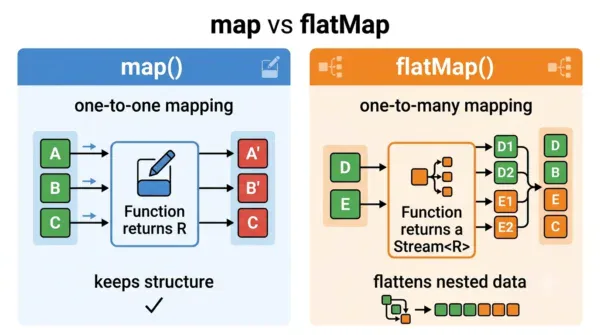
Ở mức độ cơ bản, đa số lập trình viên đều thuộc lòng câu thần chú: "Dùng map khi biến đổi 1-1, dùng flatMap khi muốn làm phẳng (flatten) một tập hợp lồng nhau".
Tuy nhiên, dưới góc nhìn của một Kỹ sư phần mềm cao cấp và Kiến trúc sư hệ thống:
- Bản chất toán học của
flatMaplà gì? Tại sao nó là phép toán cốt lõi của một Monad? - Tại sao việc lạm dụng
flatMaptrong Java Stream có thể "bóp nghẹt" bộ nhớ Heap và làm sập Garbage Collector (GC Churn)? - Java 16 đã đưa ra giải pháp đột phá nào với
mapMulti? - Tại sao trong Reactive Streams, việc chọn nhầm giữa
flatMapvàconcatMaplại gây ra thảm họa mất thứ tự giao dịch tài chính?
Bài viết này sẽ phân tích toàn diện các câu hỏi trên từ lý thuyết toán học đến kiến trúc máy chủ chịu tải cao.
# từ functor đến monadic bind
Trong Lý thuyết Phạm trù (Category Theory) và Lập trình Hàm:
- Một container bọc dữ liệu
M[T]được gọi là một Functor nếu nó hỗ trợ hàmmap:map: (T -> U) -> (M[T] -> M[U]) - Container đó được gọi là một Monad nếu nó hỗ trợ phép toán kết nối chuỗi (Monadic Bind, hay
flatMap):flatMap: (T -> M[U]) -> (M[T] -> M[U])
Nếu bạn truyền một hàm trả về container (T -> M[U]) vào map, bạn sẽ nhận được một cấu trúc lồng nhau quái dị: Stream<Stream<String>>, Optional<Optional<User>>, hoặc CompletableFuture<CompletableFuture<Order>>.
flatMap chính là chiếc chìa khóa để "bóc" lớp vỏ bọc thừa đó ra.
# java stream: bộ nhớ gc churn & giải pháp mapMulti
Hãy phân tích cơ chế hoạt động của flatMap trong java.util.stream.Stream:
// Ví dụ: Bóc tách danh sách đơn hàng
List<Order> orders = fetchLargeOrders(); // 1,000,000 đơn hàng

List<OrderItem> items = orders.stream()
    .flatMap(order -> order.getItems().stream()) // 🔴 NGUY CƠ HIỆU NĂNG!
    .toList();
# điều gì thực sự diễn ra trong heap?
Mỗi khi hàm lambda order -> order.getItems().stream() được gọi:
- JVM phải khởi tạo một đối tượng
Streamtrung gian mới. - Bên dưới đối tượng Stream đó là một đối tượng
Spliteratortương ứng. - Kèm theo các node pipeline nội bộ của Stream (
ReferencePipeline$Head).
Nếu bạn có 1 triệu đơn hàng, đoạn code trên sẽ cấp phát hơn 3 triệu đối tượng rác trên vùng nhớ Eden Space của Heap chỉ trong vài giây! Điều này gây ra áp lực khủng khiếp lên Garbage Collector (GC Allocation Churn), kéo theo các đợt tạm dừng Stop-The-World (STW pauses) không đáng có.
# đột phá với stream mapMulti (java 16+)
Để giải quyết triệt để vấn đề cấp phát bộ nhớ của flatMap, Java 16 giới thiệu phương thức mapMulti:
<R> Stream<R> mapMulti(BiConsumer<? super T, ? super Consumer<R>> mapper)Thay vì tạo ra một Stream mới cho mỗi phần tử (mô hình Pull), mapMulti chuyển sang mô hình Push (Imperative-style): Nó tái sử dụng một Consumer duy nhất để đẩy trực tiếp các phần tử con vào luồng hiện có mà hoàn toàn không tạo thêm bất kỳ đối tượng trung gian nào:
// Tối ưu hóa với mapMulti (Zero Stream Allocation):
List<OrderItem> optimizedItems = orders.stream()
    .<OrderItem>mapMulti((order, consumer) -> {
        for (OrderItem item : order.getItems()) {
            consumer.accept(item); // Đẩy trực tiếp vào pipeline hạ tầng!
        }
    })
    .toList();
TIP
Quy Tắc Benchmark Hiệu Năng: Khi duyệt qua các danh sách lớn hoặc các cấu trúc phân cấp sâu, thay thế flatMap bằng mapMulti có thể giúp giảm 40% - 70% lượng RAM rác sinh ra và tăng tốc độ xử lý lên gấp 2-3 lần.
# optional: loại bỏ null-check hell
Trong lập trình hướng đối tượng truyền thống, việc kiểm tra null lồng nhau (Defensive Null-Checking) là nguyên nhân gây ra code hình kim tự tháp (Pyramid of Doom):
// Code truyền thống: Dễ sót, khó đọc
if (user != null) {
    Address address = user.getAddress();
    if (address != null) {
        City city = address.getCity();
        if (city != null) {
            return city.getName().toUpperCase();
        }
    }
}
return "UNKNOWN";
# monadic chaining với optional flatMap
Giả sử domain entity sử dụng Optional để thể hiện các trường có thể vắng mặt:
public class User {
    public Optional<Address> getAddress() { return Optional.ofNullable(address); }
}
public class Address {
    public Optional<City> getCity() { return Optional.ofNullable(city); }
}
public class City {
    public String getName() { return name; }
}
Pipeline hoàn toàn sạch sẽ, không có bất kỳ lệnh if nào và được đảm bảo an toàn tuyệt đối trước NullPointerException:
String cityName = userRepository.findById(userId)
    .flatMap(User::getAddress)
    .flatMap(Address::getCity)
    .map(City::getName)
    .map(String::toUpperCase)
    .orElse("UNKNOWN");
# completableFuture: thenApply vs thenCompose
Trong lập trình bất đồng bộ (Non-blocking Asynchronous Programming), sự tương đồng hoàn hảo tiếp tục lặp lại:
thenApply(tương đươngmap): Áp dụng một hàm tính toán đồng bộ trên kết quả của Future.thenCompose(tương đươngflatMap): Nối chuỗi một tác vụ bất đồng bộ kế tiếp (trả về mộtCompletableFuturekhác).
# triển khai trong microservices orchestration
public CompletableFuture<UserProfileSummary> buildUserProfileAsync(String userId) {
    return userClient.fetchUserAsync(userId) // 1. Async: Lấy User (CF<User>)
        .thenCompose(user ->
            // 2. Async: Lấy Order dựa vào User ID vừa lấy được (CF<List<Order>>)
            orderClient.fetchOrdersAsync(user.getId())
                .thenApply(orders -> new UserProfileSummary(user, orders)) // 3. Sync: Gom dữ liệu
        )
        .thenCompose(summary ->
            // 3. Async: Gửi Metric ghi nhận (CF<Void>) rồi trả về summary ban đầu
            auditClient.recordAccessAsync(summary.user().getId())
                .thenApply(ignored -> summary)
        );
}
# reactive streams: cạm bẫy flatMap vs concatMap
Đây là một trong những lỗi nghiêm trọng nhất trong các hệ thống xử lý giao dịch tài chính sử dụng Spring WebFlux:
# thảm họa mất thứ tự giao dịch với flux flatMap
Toán tử flatMap trong Project Reactor (hoặc RxJava) chạy song song và bất đồng bộ các luồng con (mặc định mở tối đa concurrency = 256 inner publishers).
- Các kết quả trả về từ các luồng con sẽ được merge xen kẽ (Interleaved) ngay khi chúng sẵn sàng.
- Hậu quả: Thứ tự ban đầu của các phần tử bị phá vỡ hoàn toàn!
# giải pháp kiến trúc
| Toán tử Reactive | Tính chất thứ tự (Ordering) | Mức độ song song (Concurrency) | Use Case chuẩn |
|---|---|---|---|
flatMap | 🔴 Không bảo toàn thứ tự | 🚀 Chạy song song tối đa (mặc định 256) | Lấy dữ liệu đọc (Read-only), gọi API độc lập không phụ thuộc thứ tự. |
concatMap | 🟢 Bảo toàn thứ tự 100% | 🐢 Tuần tự (Chờ inner stream trước hoàn thành mới chạy stream sau) | Xử lý giao dịch tài chính, sổ cái kế toán (Ledger), ghi log tuần tự. |
flatMapSequential | 🟢 Bảo toàn thứ tự 100% | ⚡ Chạy song song nhưng buffer lại kết quả để emit đúng thứ tự ban đầu | Khi cần tốc độ song song nhưng output bắt buộc phải theo thứ tự input. |
// Ví dụ xử lý chuỗi giao dịch tài chính yêu cầu thứ tự nghiêm ngặt:
Flux<Transaction> transactions = getIncomingTransactionStream();

// KHÔNG DÙNG: transactions.flatMap(this::processPayment) // 🔴 LỖI THỨ TỰ!

// DÙNG: concatMap để đảm bảo Tx1 xong hoàn toàn mới đến Tx2
Flux<Receipt> receipts = transactions
    .concatMap(tx -> paymentProcessor.executeStrictOrder(tx));
WARNING
Rủi Ro Khi Dùng concatMap: Mặc dù concatMap bảo toàn thứ tự tuyệt đối, nhưng nếu một tác vụ con bị treo (stalled/timeout), toàn bộ các giao dịch phía sau sẽ bị dồn ứ (Head-of-Line Blocking). Luôn gắn timeout() cho từng tác vụ con khi dùng concatMap.
# ma trận tổng hợp toàn bộ hệ thống
| Môi trường / Framework | Toán tử 1-1 (Functor Map) | Toán tử Monadic Flattening (Monad Bind) | Đặc tính kỹ thuật cốt lõi |
|---|---|---|---|
java.util.stream.Stream | map() | flatMap() (Hoặc mapMulti() từ Java 16+) | Pull-based pipeline. Lưu ý GC Churn khi flatMap kích thước lớn. |
java.util.Optional | map() | flatMap() | Null-safe pipeline, tự động ngắn mạch (short-circuit). |
CompletableFuture | thenApply() | thenCompose() | Non-blocking async chaining trên ForkJoinPool. |
Project Reactor (Flux) | map() | flatMap() / concatMap() | Reactive Streams. Cảnh giác lỗi xen kẽ mất thứ tự với flatMap. |
# kết luận
Toán tử map và flatMap không chỉ là những method tiện ích trong bộ thư viện Java. Chúng là hiện thân của những nguyên lý toán học thanh lịch trong Lý thuyết Phạm trù, được chuyển hóa thành các công cụ giải quyết bài toán phức tạp trong kỹ nghệ phần mềm.
Làm chủ sự khác biệt giữa chúng—từ cơ chế cấp phát bộ nhớ của Stream mapMulti, đến cách điều phối luồng bất đồng bộ của CompletableFuture và tính bảo toàn thứ tự của Reactive Streams—chính là tiêu chuẩn vàng của một Kỹ sư phần mềm cao cấp.
Chỉ là những ghi chép cá nhân với hy vọng mang lại chút giá trị. Nếu thấy hữu ích, đừng ngại chia sẻ cho bạn bè & đồng nghiệp nhé!
Happy coding 😎 👍🏻 🚀 🔥.
On this page
- # từ functor đến monadic bind
- # java stream: bộ nhớ gc churn & giải pháp mapMulti
- # điều gì thực sự diễn ra trong heap?
- # đột phá với stream mapMulti (java 16+)
- # optional: loại bỏ null-check hell
- # monadic chaining với optional flatMap
- # completableFuture: thenApply vs thenCompose
- # triển khai trong microservices orchestration
- # reactive streams: cạm bẫy flatMap vs concatMap
- # thảm họa mất thứ tự giao dịch với flux flatMap
- # giải pháp kiến trúc
- # ma trận tổng hợp toàn bộ hệ thống
- # kết luận